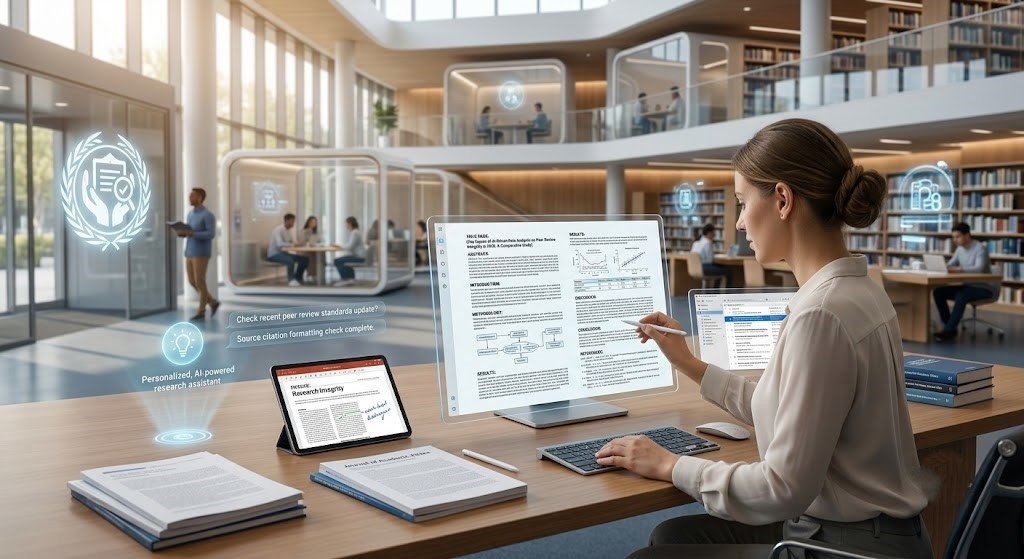
How to Structure a Research Paper Correctly in 2026
Published: 2026 Academic Writing News
As academic publishing continues to evolve, researchers must adapt to modern standards and expectations. A well-structured research paper not only improves readability but also increases the chances of acceptance in peer-reviewed journals. In 2026, editors and reviewers expect manuscripts to follow a clear, logical framework that effectively communicates research findings.
Whether you're a student, researcher, or academic professional, understanding the correct research paper structure is essential for publication success. Recent trends show that journals increasingly prioritize clarity, transparency, and reproducibility, making proper organization more important than ever.
The Importance of Research Paper Structure
A research paper's structure serves as a roadmap for readers. It helps reviewers quickly identify the study's objectives, methodology, findings, and significance. Poorly organized papers often face rejection regardless of the quality of the research itself.
Before starting your manuscript, consider reviewing our guide on How to Choose a Research Topic in 2026 to ensure your study begins with a strong foundation.
1. Title Page
The title page remains the first impression of your research. In 2026, journals favor concise and descriptive titles that accurately reflect the study's content. Include:
- Research title
- Author names
- Institutional affiliations
- ORCID IDs (if required)
- Corresponding author details
Avoid overly complex titles and unnecessary jargon. Search engine visibility is also becoming an important consideration for academic publications.
2. Abstract
The abstract summarizes your entire study in approximately 150–300 words. Most journals now encourage structured abstracts that include:
- Background
- Objectives
- Methods
- Results
- Conclusion
A strong abstract helps researchers discover your work through academic databases and search engines.
3. Introduction
The introduction should explain the research problem, existing literature, and study objectives. A common approach in 2026 is the "funnel method":
- Present the broader topic.
- Review existing research.
- Identify knowledge gaps.
- State research questions or hypotheses.
Authors conducting literature reviews can benefit from reading World Academic Press research resources for additional academic writing guidance.
4. Literature Review
Many journals now expect a dedicated literature review section, particularly in social sciences, education, and business research. This section should:
- Analyze previous studies critically
- Identify trends and debates
- Highlight research gaps
- Establish the need for your study
Rather than simply summarizing sources, focus on synthesizing findings and demonstrating scholarly understanding.
5. Methodology
The methodology section explains how the research was conducted. Transparency remains a major publishing priority in 2026.
Include:
- Research design
- Sample selection
- Data collection procedures
- Research instruments
- Data analysis methods
- Ethical considerations
Providing sufficient detail allows other researchers to replicate and validate your findings.
6. Results
The results section should present findings objectively without interpretation. Use:
- Tables
- Charts
- Graphs
- Statistical summaries
Modern journals encourage visual presentation of data whenever possible. Ensure every figure and table has a clear caption and reference within the text.
7. Discussion
The discussion section interprets the results and connects them to existing research. This is where researchers explain:
- What the findings mean
- Whether hypotheses were supported
- How results compare with previous studies
- Practical and theoretical implications
A strong discussion demonstrates the significance of your contribution to the field.
8. Conclusion
The conclusion summarizes the study's key findings and implications. Avoid introducing new data. Instead:
- Restate objectives
- Highlight major findings
- Discuss limitations
- Suggest future research directions
Many high-impact journals now emphasize actionable recommendations within the conclusion section.
9. References
Accurate referencing remains essential in academic publishing. Common citation styles include:
- APA 7th Edition
- MLA 9th Edition
- Chicago Style
- Harvard Referencing
- IEEE Style
Reference management tools can significantly reduce citation errors and improve manuscript consistency.
Emerging Research Paper Trends in 2026
Several developments are shaping research writing standards:
- Greater emphasis on open science practices
- AI disclosure requirements in many journals
- Data availability statements
- Research transparency standards
- Enhanced supplementary materials
Researchers who align with these evolving expectations are more likely to achieve successful publication outcomes.
Final Thoughts
A properly structured research paper is fundamental to effective academic communication. By organizing your manuscript with a clear title page, abstract, introduction, literature review, methodology, results, discussion, conclusion, and references, you significantly improve both readability and publication potential.
As academic standards continue to evolve in 2026, researchers should remain informed about journal-specific requirements and emerging publishing trends. Careful planning, clear organization, and adherence to best practices can transform strong research into a publishable manuscript.
For more academic writing insights, explore our related guides: