Business & Economics,Entrepreneurship
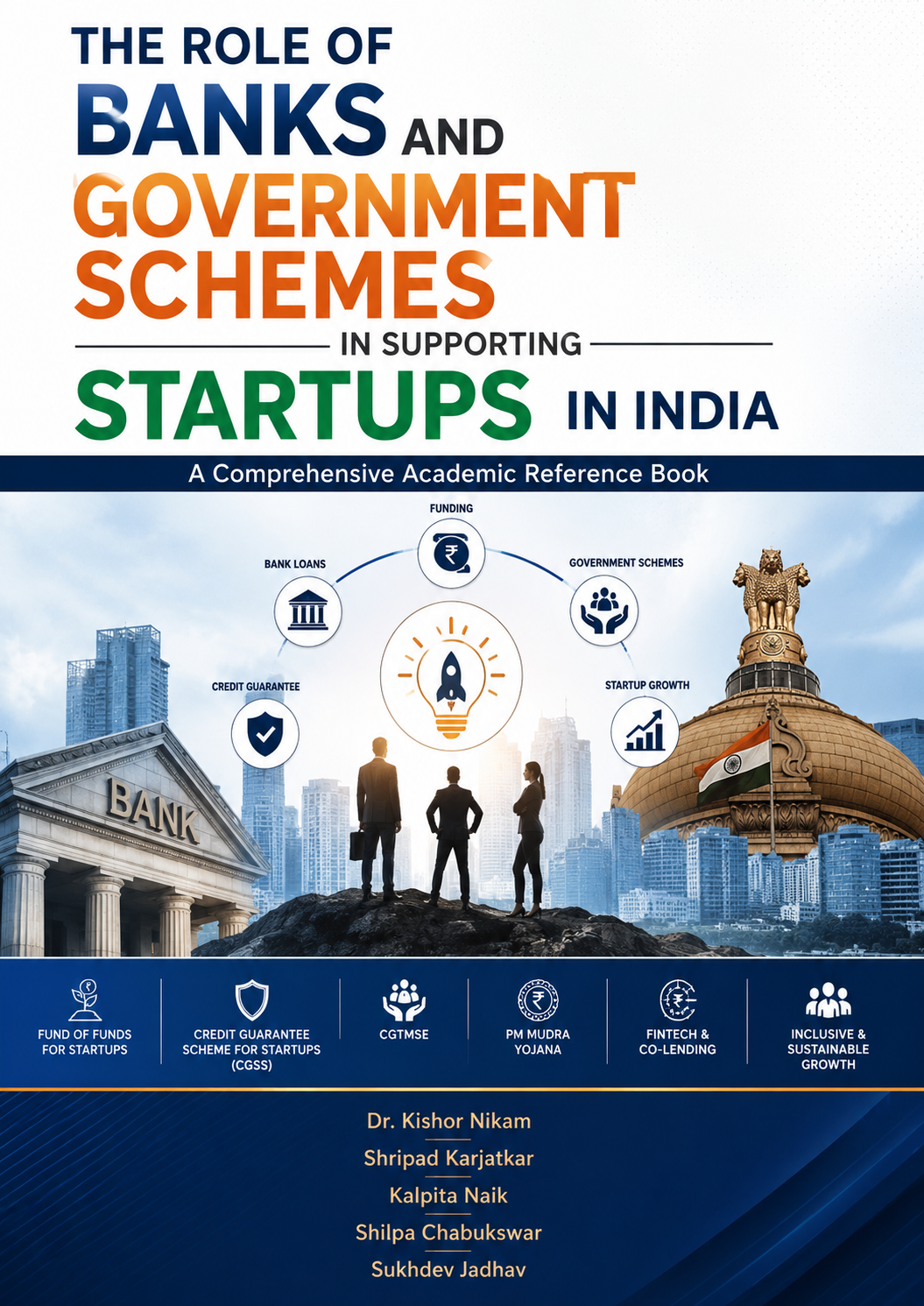
THE ROLE OF BANKS AND GOVERNMENT SCHEMES IN SUPPORTING STARTUPS IN INDIA A Comprehensive Academic Reference Book
AUTHOR:
Dr. Kishor Nikam, Shripad Karjatkar, Kalpita Naik, Shilpa Chabukswar, Sukhdev Jadhav
DATE ISSUED:
Aug 2026
READ:
SUBJECT:
Startup Financing, Indian Startup Ecosystem, Government Schemes, Bank Finance, Entrepreneurship, MSME Finance, Credit Guarantee, Venture Debt, Fintech, MUDRA, CGSS, CGTMSE, SIDBI, DPIIT, RBI, Startup Policy.
JEL CODE:
BUS025000; BUS004000; BUS027000
LANGUAGE:
English
ISBN:
978-81-68301-09-2
₹180₹1,320
Digital Edition
Instant PDF Delivery
₹180
Print Edition
Global Shipping
₹860
Description
India's startup ecosystem has grown from fewer than 500 recognized ventures in 2016 to over two lakh DPIIT-recognized startups today, yet access to formal, affordable finance remains one of the single greatest barriers to survival and scale-up. This book offers a comprehensive, evidence-based account of how banks, development financial institutions, and government-backed schemes work together — and where they fall short — in financing India's startups.
Across thirteen chapters, the book traces the full financing lifecycle: from the historical evolution of startup and MSME policy, through the architecture of the Fund of Funds for Startups, the Credit Guarantee Scheme for Startups (CGSS), CGTMSE, and the Pradhan Mantri MUDRA Yojana, to bank loan products, venture debt, fintech-bank co-lending models, and the regulatory frameworks issued by RBI, SIDBI, DPIIT, and NCGTC. It closes with a candid assessment of persisting regional, gender, and sectoral disparities in access to finance, and a forward-looking view of the reforms likely to shape the decade ahead (2026–2035).
Each chapter is built for the classroom and the boardroom alike: clear learning objectives, structured explanations of scheme design and eligibility, real-world case studies of both success and failure — including Byju's, Razorpay, Zomato, Policybazaar, and GoMechanic — practice questionnaires, and curated references for further reading.
Who Should Read This Book
Undergraduate and postgraduate students of banking, finance, and entrepreneurship; MBA and commerce faculty; bank and NBFC credit officers; policymakers and scheme administrators; and startup founders seeking to understand the institutional finance landscape they must navigate.
Secure Payment
Protected Transactions
Instant Access
Digital PDF Ready
World-Wide
Global Shipping
Support
24/7 Author Assistance